Nobody Knows Your Name
Until they do. And that doesn't happen by accident—it happens by showing up with the same voice, in the same way, long enough that people stop reading your boards and start recognizing them.
Lamar and Outfront have name recognition because they’ve been everywhere forever. Scale made them inescapable. But a smaller billboard operator with a sharp, consistent self-promo campaign can close that gap locally—and Bill Durden’s been proving it for the better part of two decades. It’s never a one-and-done. It’s a commitment. Below, we’ll break down the how’s and why’s—and throw in some outlandish examples to get your wheels turning.
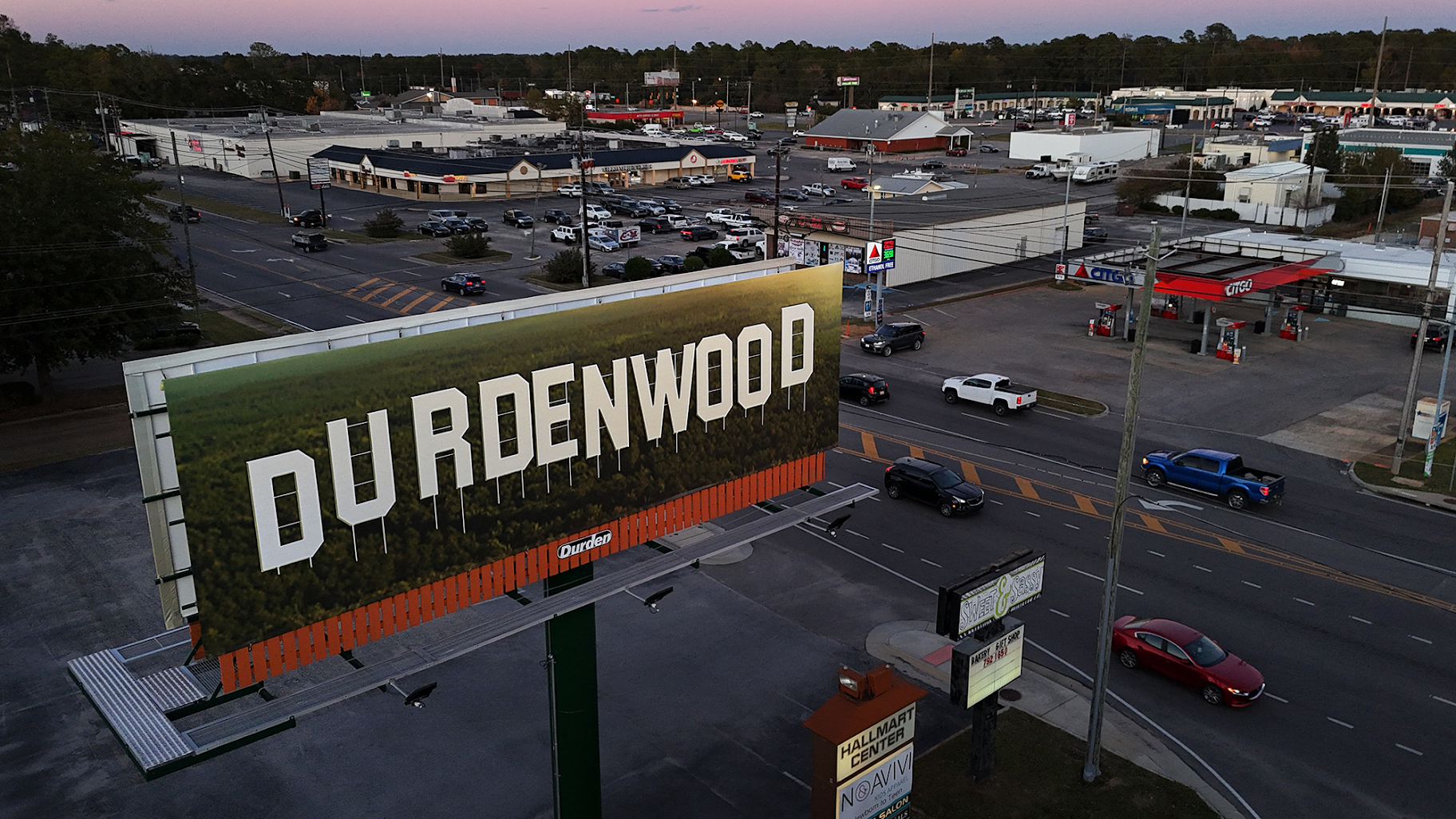
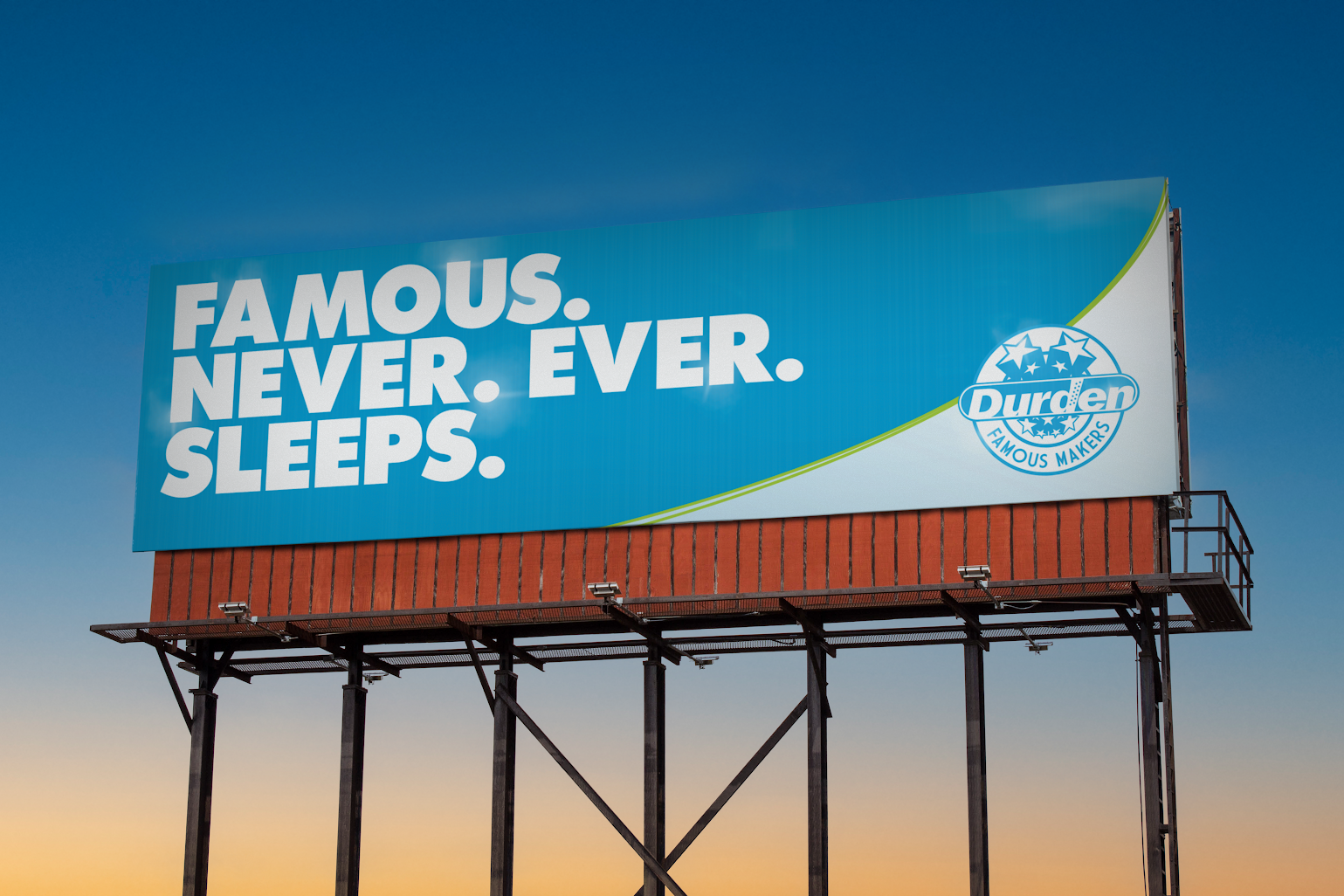
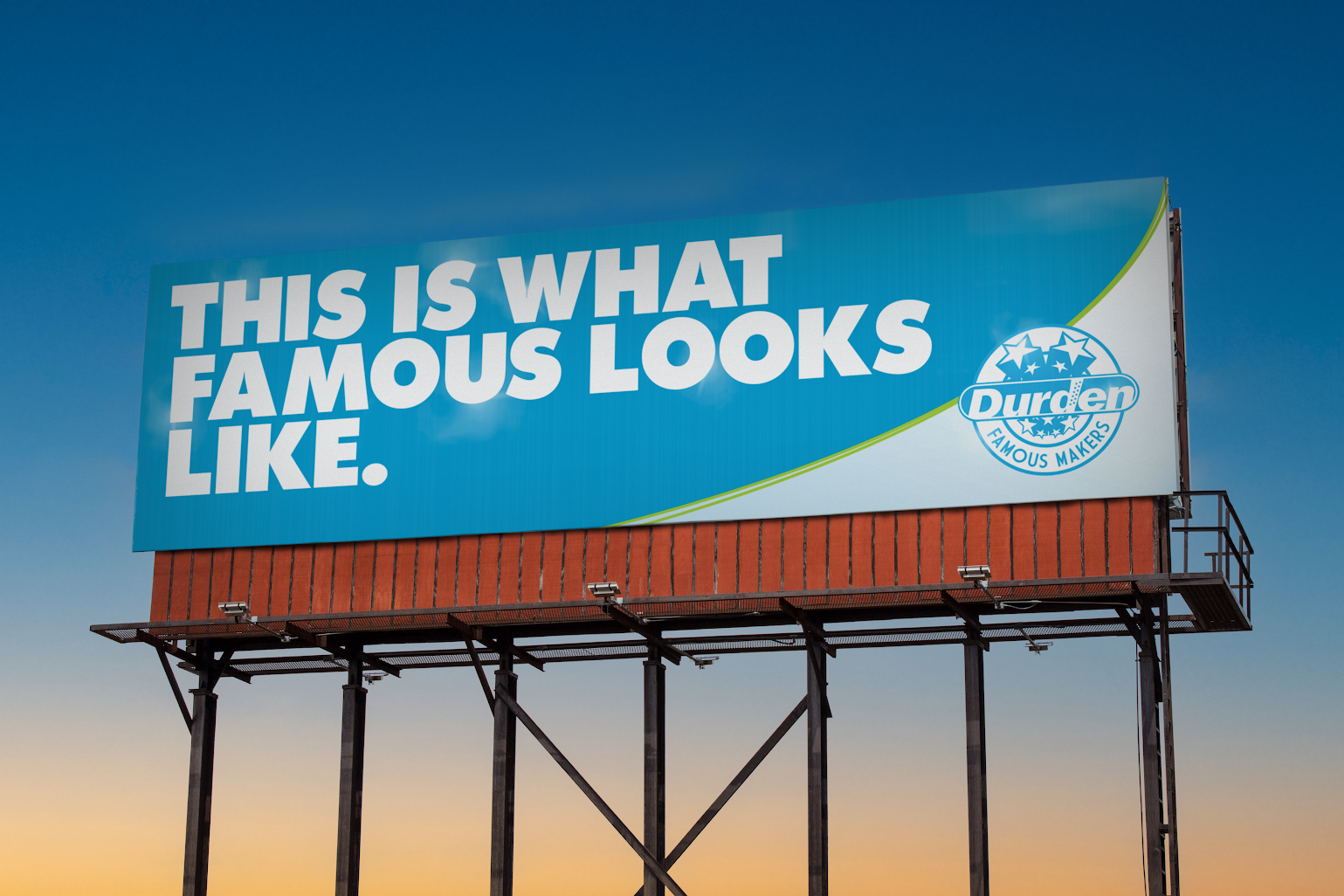
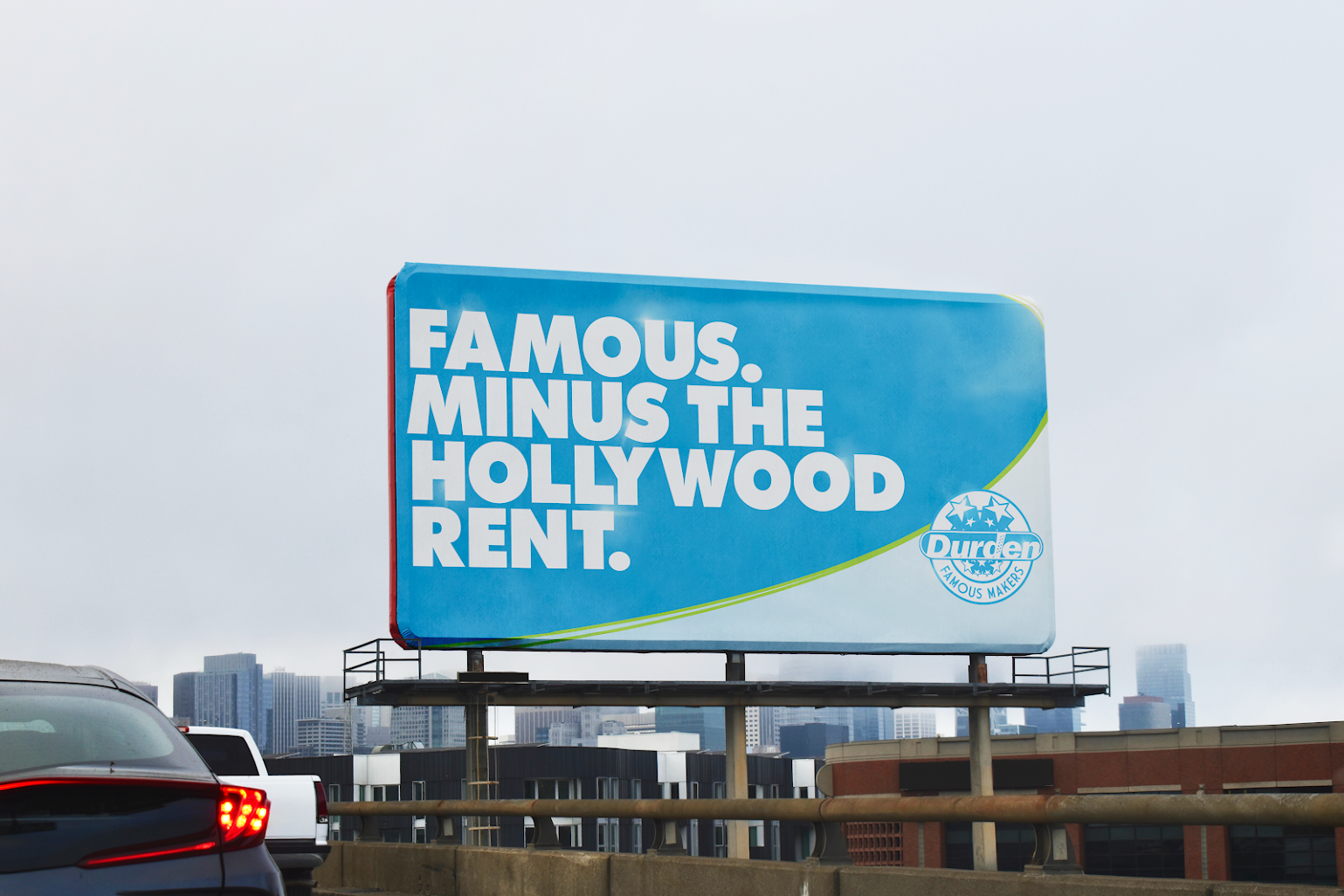
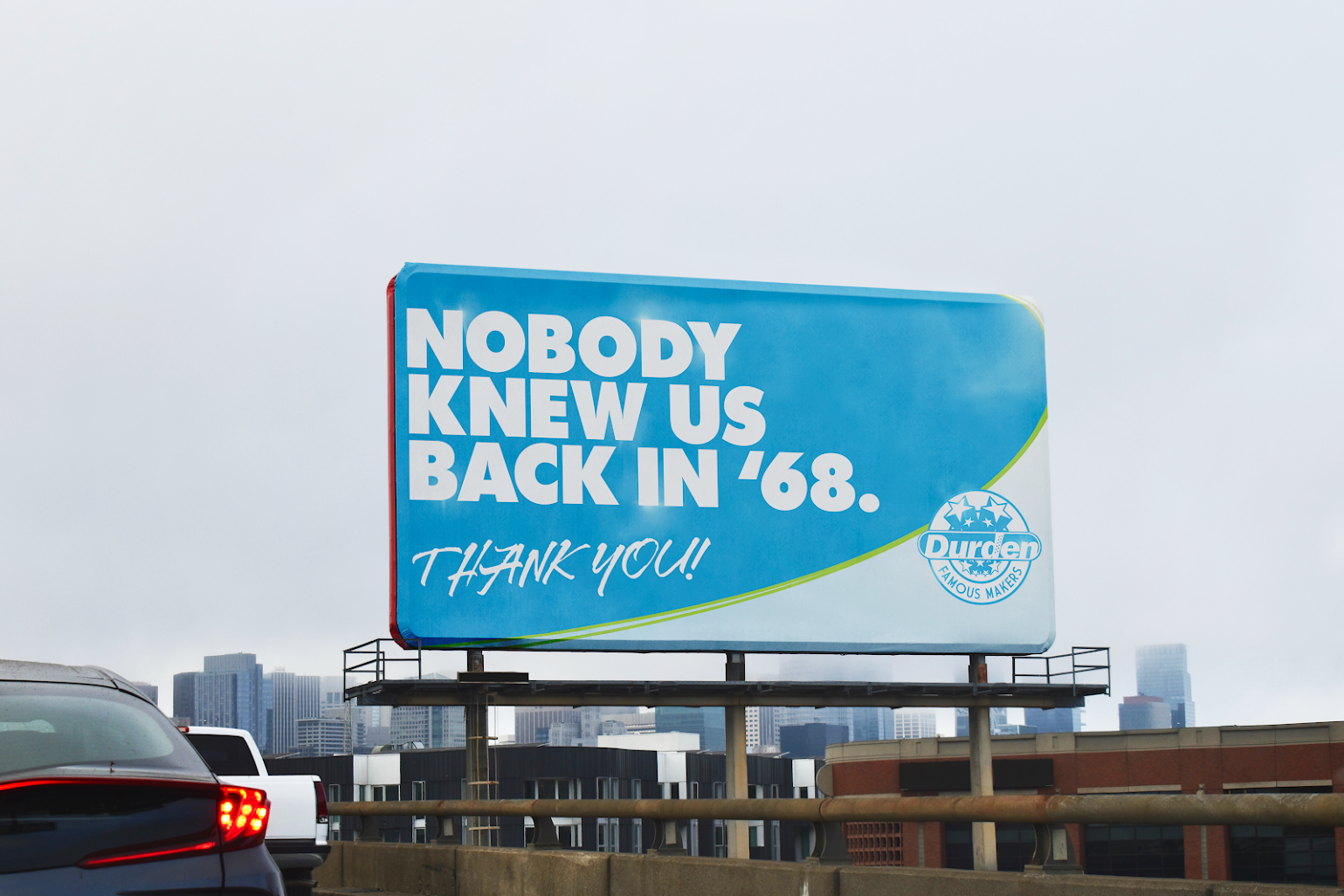
You’ve got to find your word.
The Durden story. One word, one voicemail, one campaign. Eventually, leading to Durdenwood. It shows how simple a campaign idea can be. What began as an off-the-cuff voicemail promising the client a taste of “famous” has since become an entire brand.
From that one voicemail—which got the client to call back BTW—Bill Durden has built years of fame-inducing self-promo. The entire company now speaks the language of fame. And with consistent emphasis on that word and that theme—the reputation has only solidified and spread. So much so that clients ask for the “famous treatment” and when their campaign goes live, he’s getting texts that simply read “Making [client name] Famous!”

You set the creative bar.
If your self-promo looks like a business card, your advertisers’ billboard ads will too. Your clients are only aware of what you show them. What you put on your own boards is a signal about what you believe is possible. And ultimately, what you believe works. If you think great, insightfully creative and humorous campaigns can work for your clients, then you’d better show ’em by running your own. If you lead by example, others will follow.
Show, don’t tell.
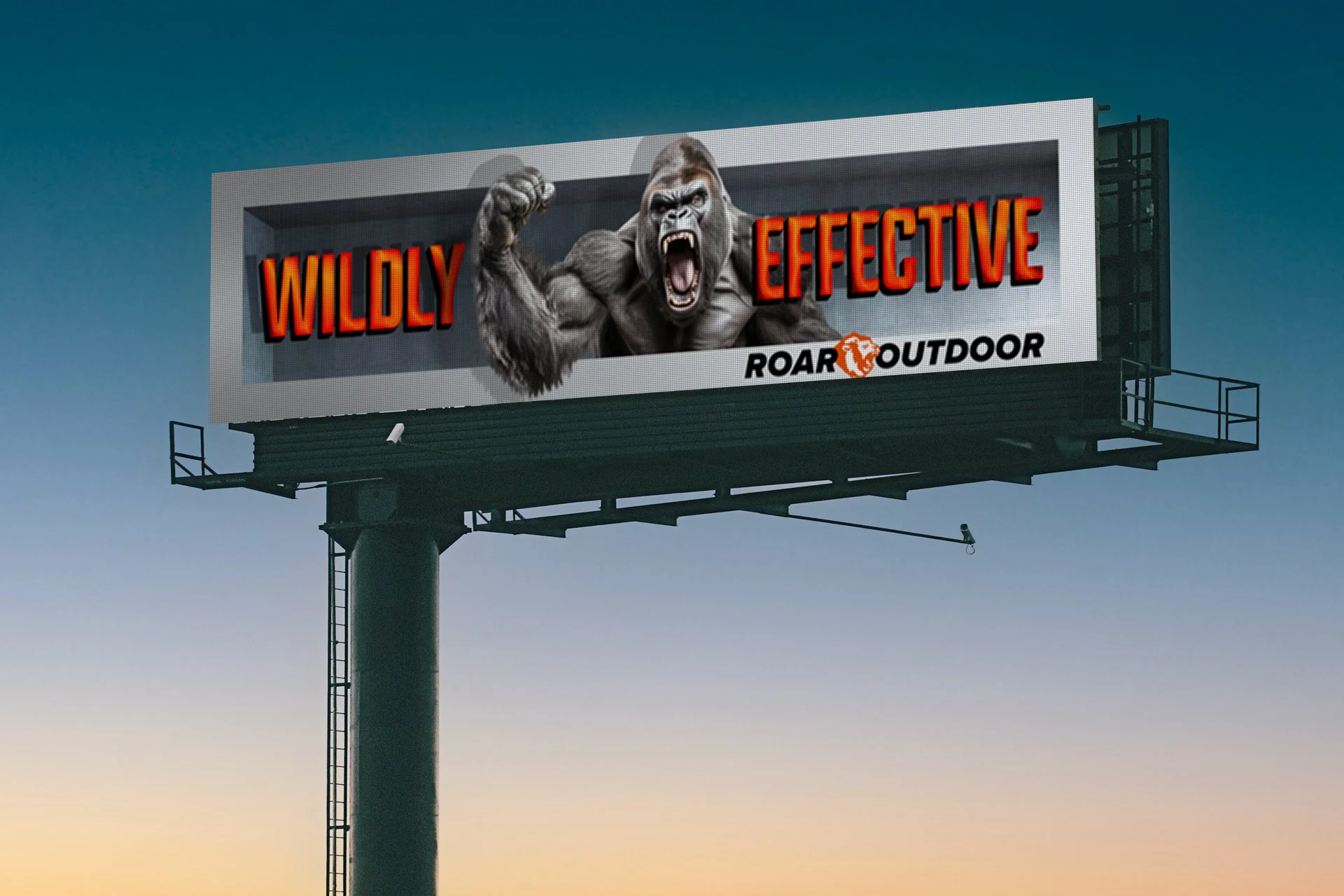
Available isn’t nothing, but it’s not enough.
The direct response board works. “Advertise Here” plus a phone number fills inventory and nobody’s saying kill it. But if you’ve got a real footprint—dozens or hundreds of faces—and every self-promo is just a phone number on white vinyl, you’re treating your own inventory like remnant space. Your self-promo boards are the single best proof-of-concept you have, running at scale, 24/7, in front of the exact advertisers and agencies you want to attract.
A clever, strategically placed, self-promo doesn’t just say “advertise here”—it says “look what this format can do in the right hands.” That’s what lands the six-figure brand client. The phone number never will.
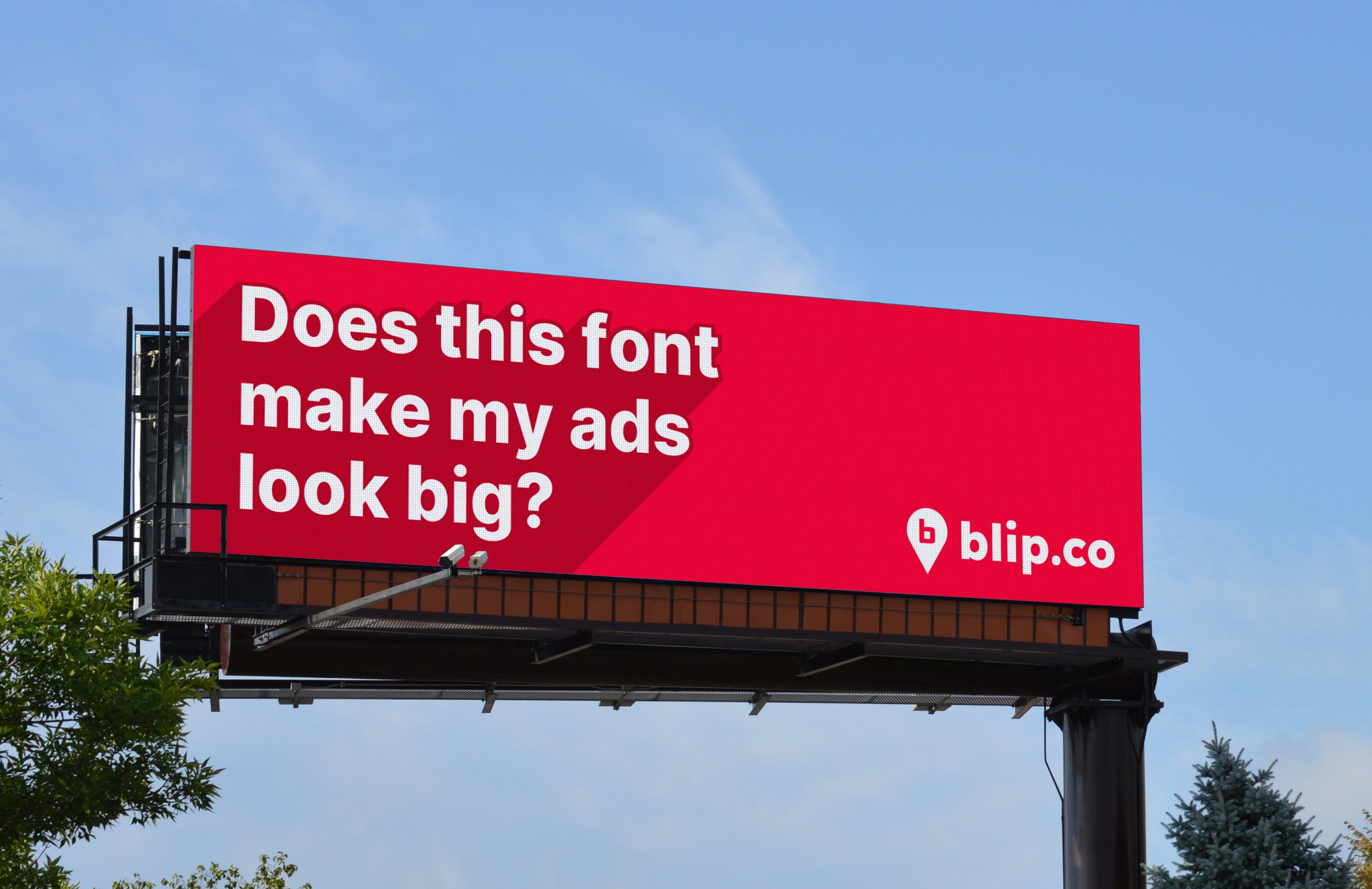
Stop settling for leftovers.
Most operators slot self-promo into whatever’s unsold—the B-side of a rural two-face or the board that’s been vacant for three months. That’s backwards. Your best boards are your best argument. Give yourself premium space the same way you‘d give it to a top-tier client, because that’s exactly who’s driving past it. And keep creative ready to go—not “we’ll get to it” ready, but printed-and-waiting ready—so the moment a premium face opens up for a short window between contracts, you can drop something great on it within days.
A week on your best board with killer creative will do more for your brand than six months on a face nobody’s looking at.
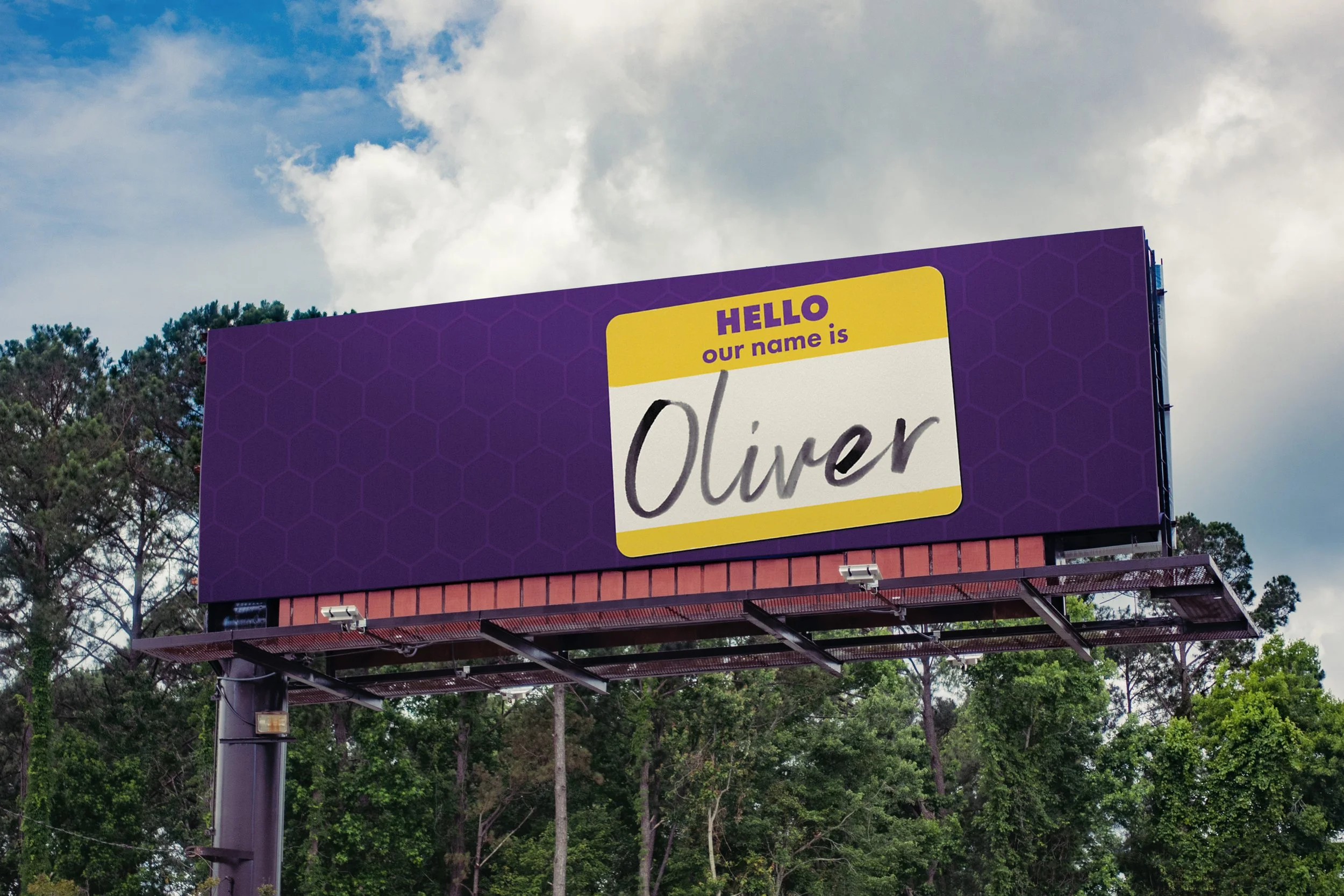
Consistency is the strategy.
At the very least, commit to three years. System1's research backs what every great brand already knows—memorable campaigns don’t build in a quarter, they build through relentless repetition. Most operators redesign their self-promo every year because they get bored, not because the market told them to. That’s the trap. Look at Durden Outdoor—same campaign, same voice, running for the better part of two decades. It doesn’t feel like an ad anymore. It feels like Durden. That’s not repetition, that’s ownership. Your self-promo should work the same way.
Pick a creative platform, commit to it, and let it compound. The billboards don’t get tired. Only you do.
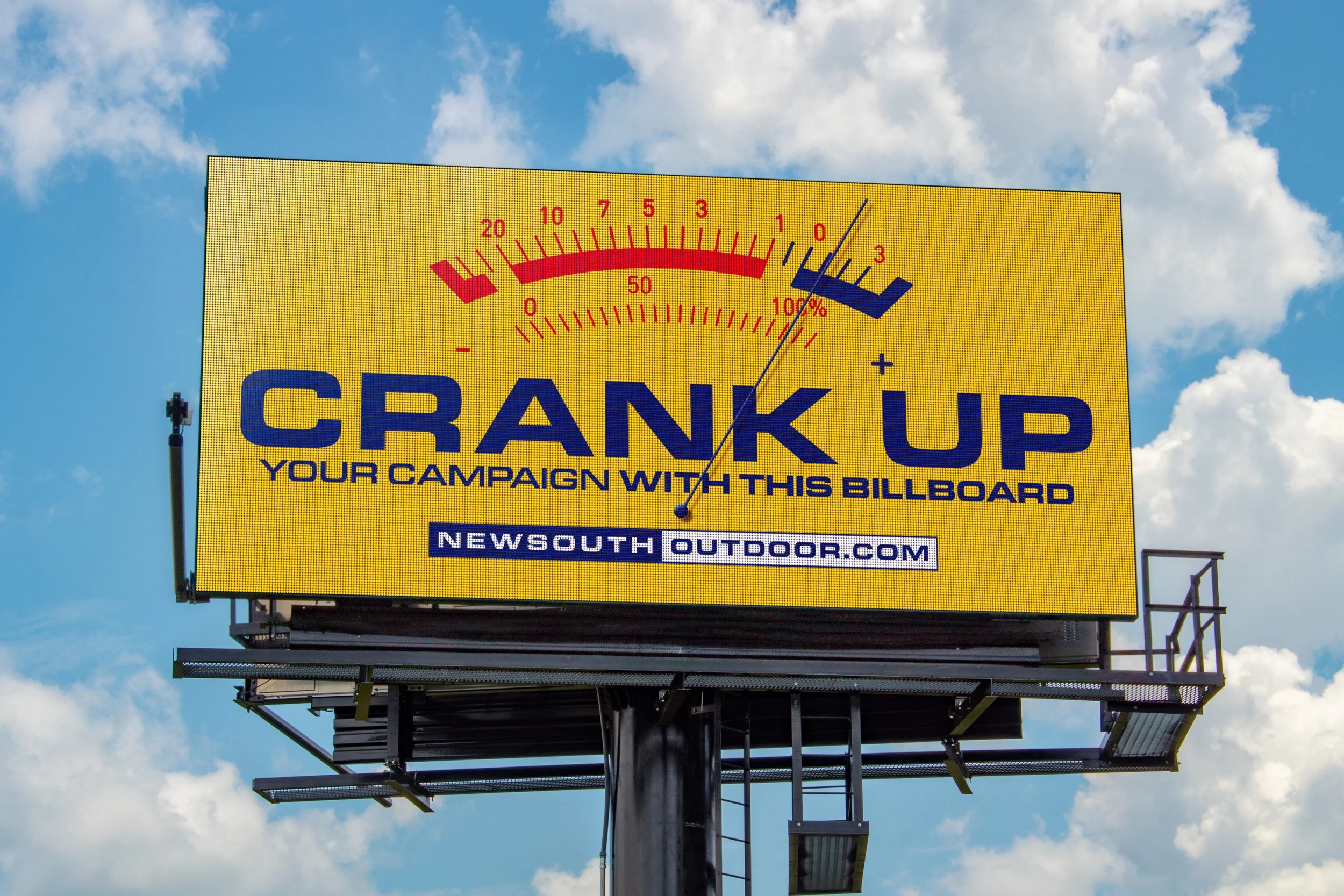
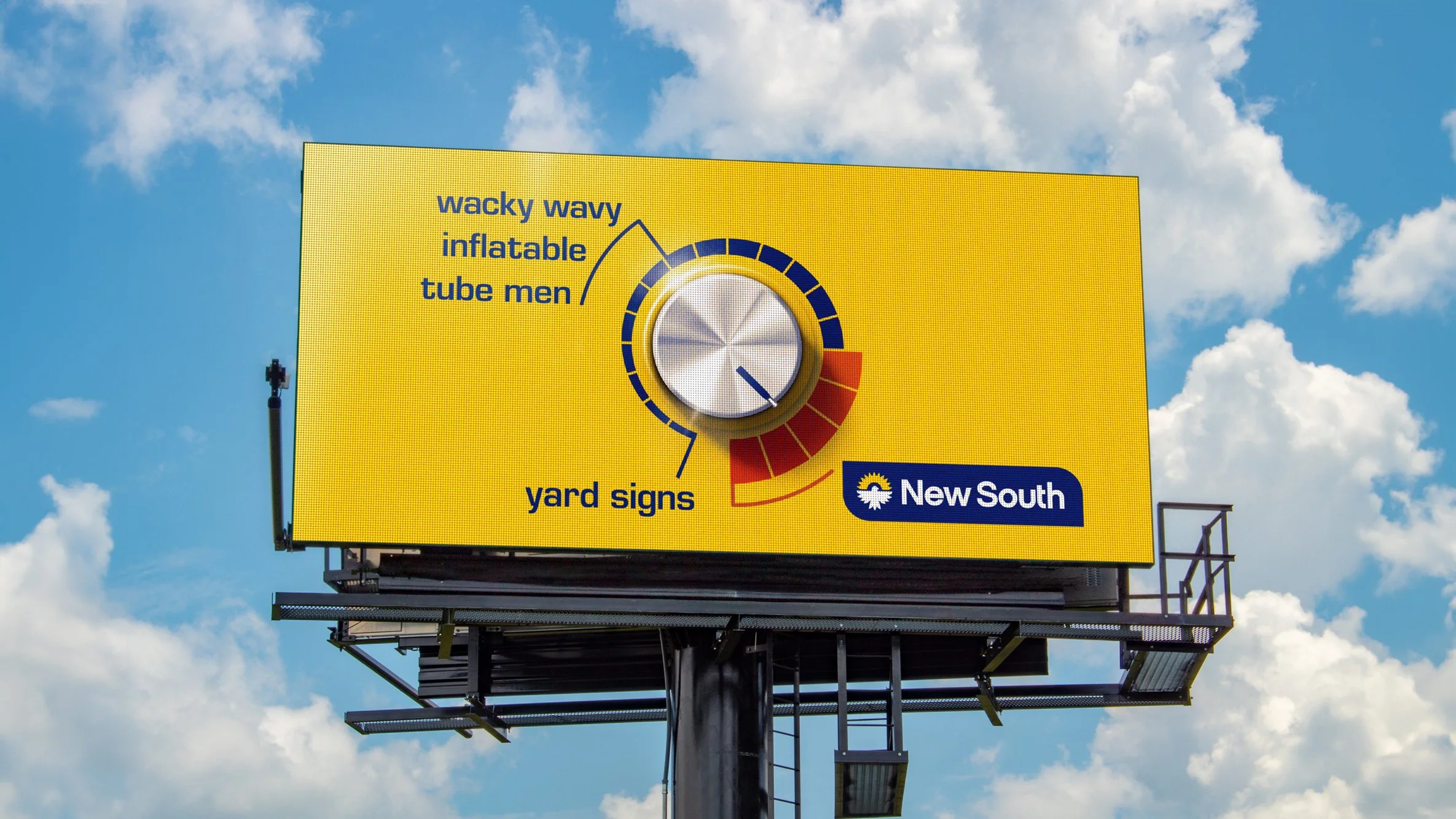
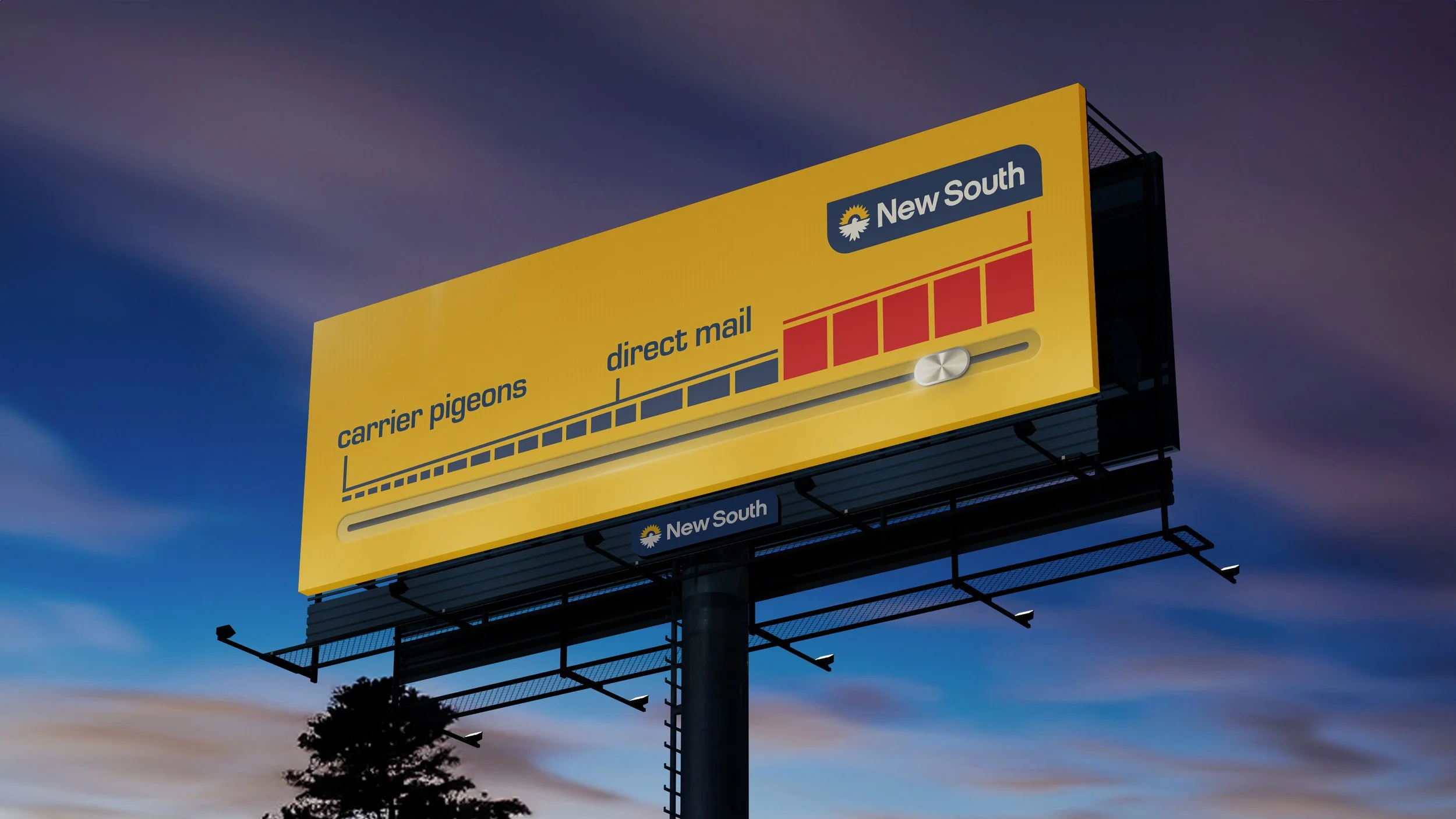
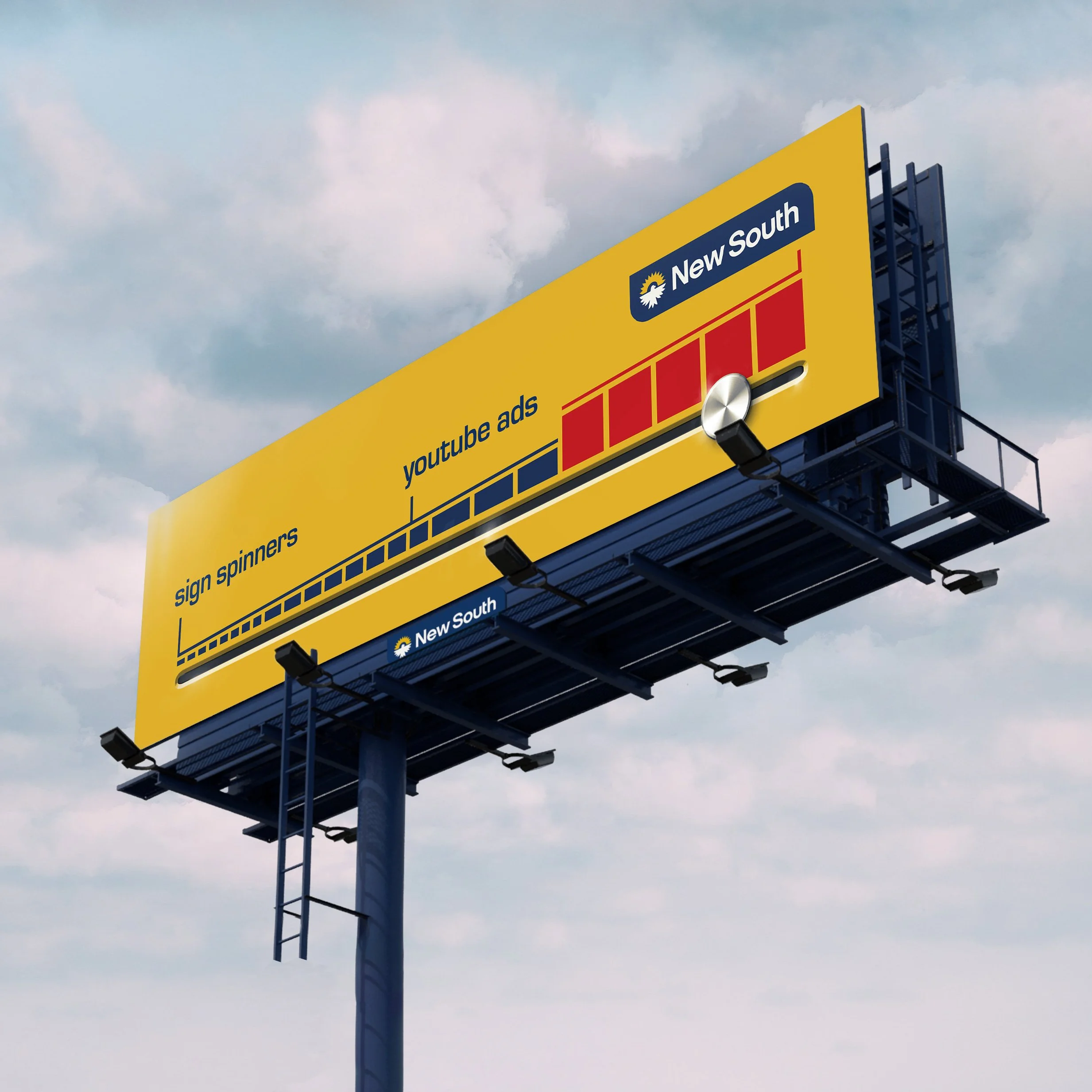
Carry it everywhere.
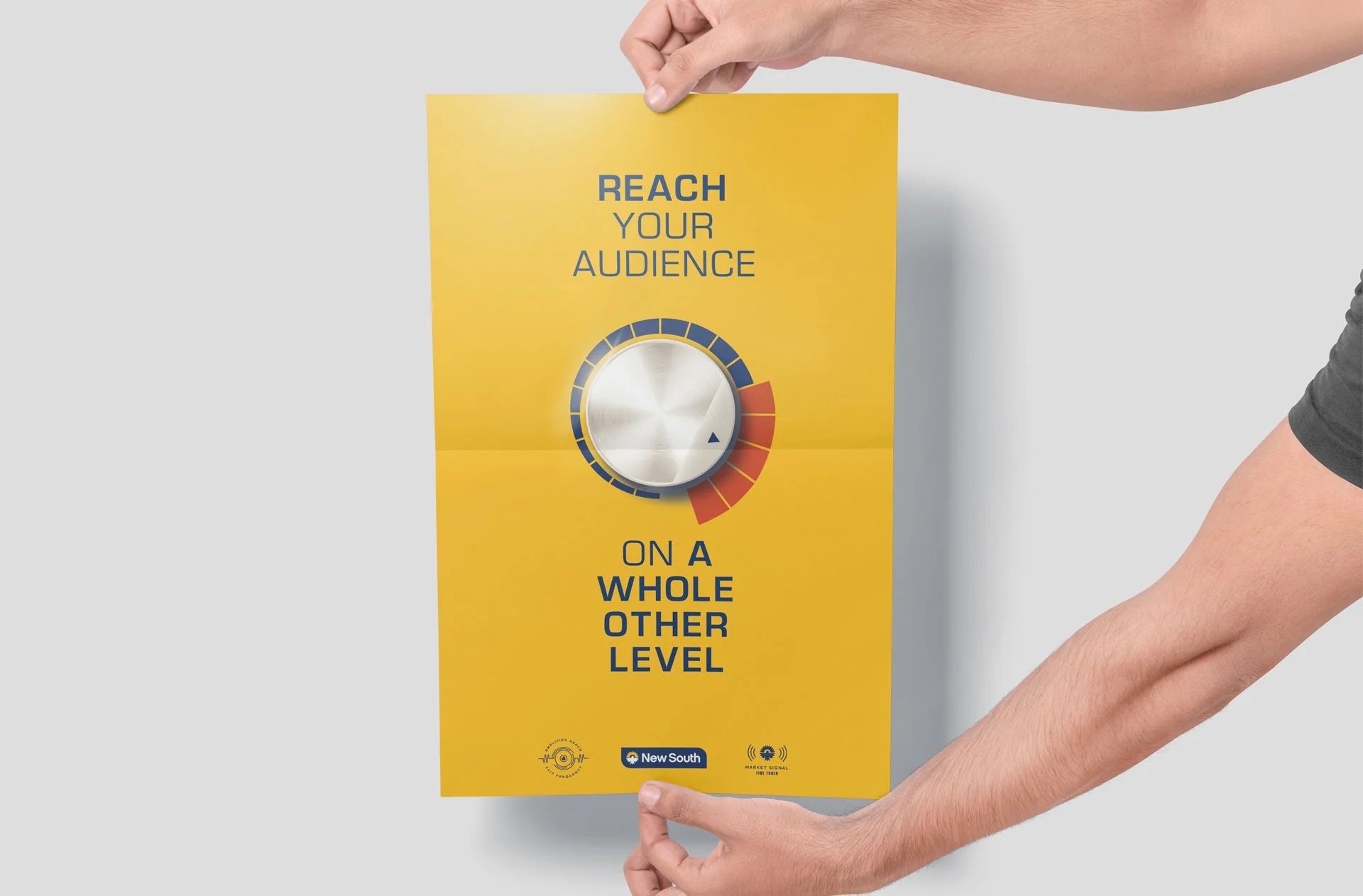
The billboard is only the headline. Everything else is supporting media. Your voicemail greeting, your proposals, your website hero, the leave-behind you hand to an advertiser at lunch—all of it should feel like it came off the same board. Because when your self-promo creative is strong enough to stop someone on a highway, it’s damn sure strong enough to carry a PDF or a landing page.
Most operators build a great board and then let the rest of their brand look like it was designed by a nephew with Canva. That’s a disconnect your prospect feels even if they can’t name it. One campaign. One voice. Every touchpoint. The board earns the attention—everything else closes the deal.
This is where we come in.
We’re Up To Something—a two-man OOH creative shop that builds self-promo campaigns for operators who are done treating their own inventory like an afterthought. If you've got the faces and you’re ready to stop whispering into the wind with white vinyl and a phone number, let’s talk.